
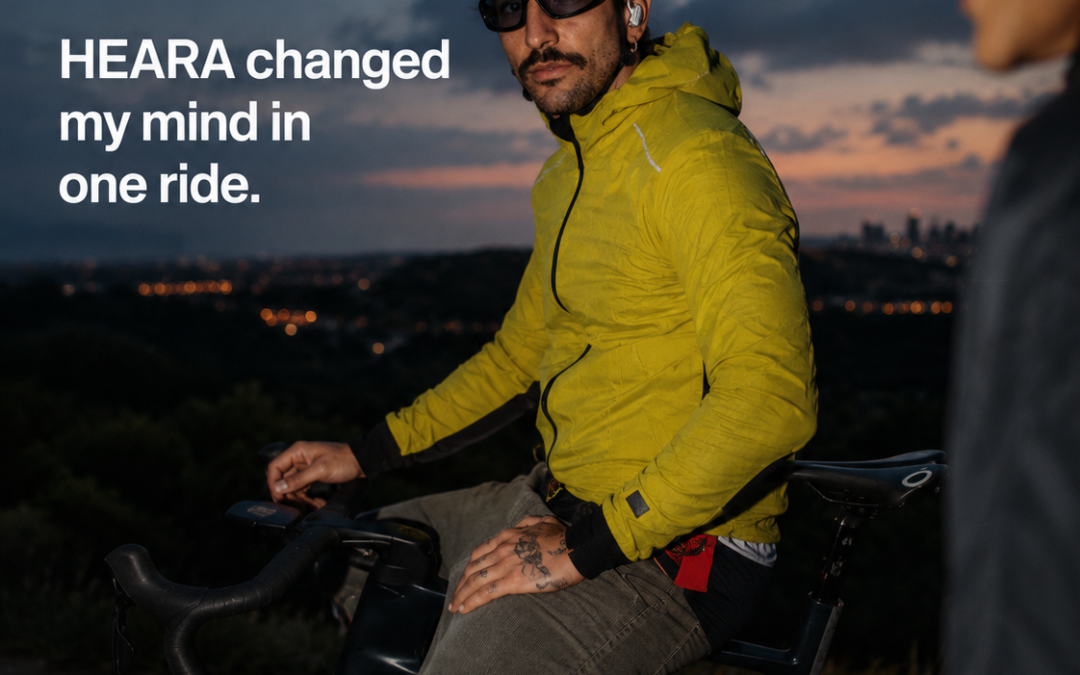
Most cyclists I know have tried at least three different earphones for cycling in Spain and given up on each. Sealed earbuds feel unsafe in city traffic. AirPods fall out on rough roads. Helmet speakers sound terrible. There’s a reason no one talks about a ‘perfect’ cycling earphone — they’re all compromises in different places.
This is a guide to choosing the least-bad option, with one note on Spanish road rules that catches people out.
The rule no one tells you about
The Spanish DGT prohibits the use of audio devices that block the ears while driving any vehicle on public roads, and that explicitly includes bicycles. The exact wording is in the Reglamento General de Circulación, Article 18.2: “el conductor… no podrá utilizar… dispositivos visuales o auditivos.” DGT
What does “block the ears” mean in practice? The DGT and the Guardia Civil interpret it as anything that prevents you from hearing traffic — primarily sealed earbuds and over-ear headphones. Open-ear and bone-conduction devices, which leave your ear canal physically uncovered, fall outside this interpretation. They’re functionally legal because they don’t block ambient sound.
That said: getting pulled over with any visible audio device on a bike is still possible if an officer decides your awareness is compromised. The fine is €200. Plan accordingly.
What you actually need from earphones for cycling in Spain
Cycling earphones need four things. Most products fail at least one.
Ambient awareness. You have to hear cars approaching from behind, traffic lights changing, conversations at café tables you’re passing, and the bike bell of the cyclist who wants you out of the lane. This is non-negotiable for road riding in Madrid, Barcelona, Valencia, or anywhere urban. Sealed earbuds cannot do this.
Fit security. Cobblestones in Sol, potholes on Castellana, speed bumps in the bike lane on Príncipe de Vergara — your earphones need to stay in place when you sprint and when you hit something unexpected. Sport-hook designs survive this. Press-fit earbuds do not.
Battery life over your longest ride. A 50 km Sunday ride in the Sierra de Guadarrama takes 3 hours. A two-hour 8-hour battery rating starts to look thin halfway through if it’s cold and the earphones are draining faster than usual. Look for 6+ hours minimum, 8+ ideally.
Sweat resistance. Spanish summers are hot. Madrid hits 38°C in July, and you sweat through everything. IPX4 or better is the minimum standard.
The three real categories
Open-ear with sport-hook fit. True stereo audio, leaves ears physically open, hook keeps them in place. This is the strongest fit for road cycling: HEARA, some Shokz models, and the older Aftershokz Aeropex variants live here. Price range €75–250.
Bone conduction. Cheekbone vibration, full ambient awareness, no speakers in front of your ears at all. Best example is Shokz OpenRun Pro at €130–180. Audio quality is thinner than open-ear and you lose bass response. Sound quality matters less for podcast listeners than music listeners.
Clip-style open-ear. Premium category dominated by Bose Ultra Open at €349. Excellent audio, but the clip design can shift during high-impact riding. Better for commuting than for performance riding.
What I’d actually buy
For a daily commute through Madrid traffic with music as the primary listen, sport-hook open-ear is the cleanest answer. You hear the city, the music sounds like music, and the earphones stay where you put them. For €75 you can get HEARA. For €130 you can get a Shokz OpenRun Pro with a stronger brand but bone-conduction audio limitations. For €349 you can get Bose Ultra Open with the best sound but clip-shift risk on rough roads.
If you mostly ride for fitness on quiet routes and listen to podcasts, bone conduction is fine — the audio downsides barely matter. If you ride in dense city traffic and care about audio, open-ear with a hook is the safer call.
Quick reference
- Daily city commute, listens to music → sport-hook open-ear (€75–250)
- Long fitness rides, mostly podcasts → bone conduction (€130–180)
- Mixed commute + lifestyle use, willing to spend → Bose Ultra Open (€349)
- Mountain bike, rough terrain → sport-hook open-ear, nothing clip-style
The DGT rule rules out sealed earbuds entirely. Everything else is about matching the product to how you actually ride.
[CTA at end of article] HEARA open-ear earphones — sport-hook fit, true stereo, 8h battery, IPX4 sweat resistance, €75. Free EU shipping, designed in Madrid. [Shop HEARA →]